Air Compression Leg Massager: Foot, Calf, Thigh & Knee Relief
Air Compression Leg Massager for Foot, Calf, Thigh & Knee Pain Relief
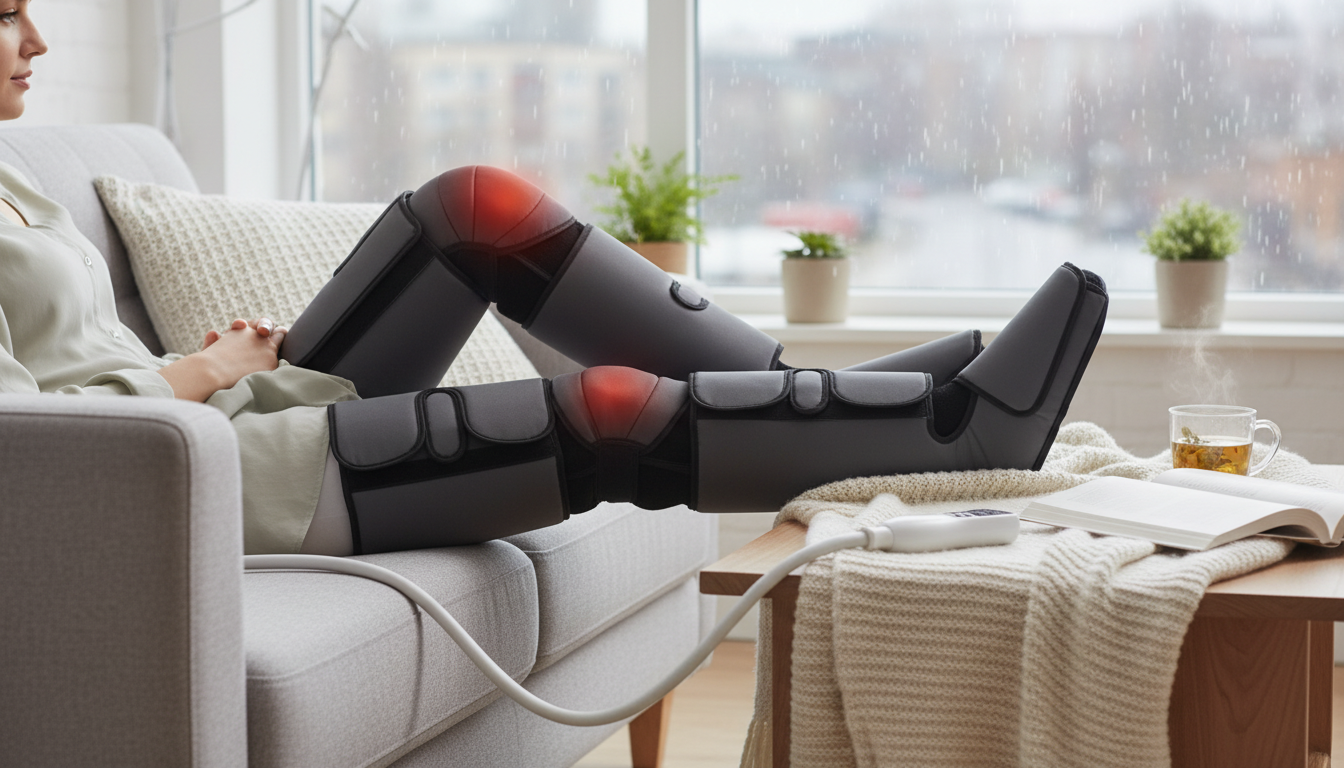
A well-designed air compression leg massager can help ease tight, tired legs by applying rhythmic pressure from the foot up through the calf and thigh. Instead of “digging in” like a deep-tissue massage, it uses inflatable chambers to create a steady squeeze-and-release pattern that many people find soothing after long days of standing, travel, workouts, or desk time. Below is what the experience is like, who tends to benefit most, how to use compression comfortably, and simple habits that can improve results for soreness, mild swelling, and everyday leg fatigue.
What air compression massage feels like
Air compression massage is often described as a firm, even hug around the legs. Inflating chambers wrap the leg in a consistent squeeze, then release in cycles to create a gentle “pumping” rhythm.
- Inflating chambers wrap the leg in a firm, evenly distributed squeeze, then release in cycles.
- Pressure typically moves upward to encourage a “pumping” sensation rather than a deep kneading massage.
- Many people notice relief for post-work fatigue, long sitting/standing, and heavy-feeling legs within a few sessions.
If you’re used to a massage gun or hands-on kneading, the biggest difference is that compression feels more uniform. That can be especially comfortable for sensitive calves and around the knee area, where pinpoint pressure sometimes feels too intense.
Common reasons people use a leg compression massager
- Foot and arch fatigue after long days on hard floors or extended walking.
- Calf tightness after workouts, running, cycling, or travel.
- Thigh heaviness from prolonged sitting, desk work, or reduced daily movement.
- Knee-area discomfort related to surrounding muscle tension and stiffness (not a replacement for medical treatment).
- Mild swelling and a “puffy” feeling that improves with elevation and gentle compression.
Quick match: symptoms and a comfortable approach
| Concern | Suggested setup | Session tip |
|---|---|---|
| Foot soreness | Lower intensity, focus on foot/ankle coverage | Pair with warm socks afterward for comfort |
| Calf tightness | Medium intensity, full-leg cycle | Stretch calves gently after the session |
| Heavy thighs | Medium intensity, longer cycle time | Take a short walk right after to keep circulation moving |
| End-of-day swelling | Low-to-medium intensity | Elevate legs during use if possible |
Key features that matter for comfort and results
Two massagers can look similar but feel very different in real use. Comfort usually comes down to how evenly pressure is distributed, how easily you can adjust it, and whether the wrap stays in place.
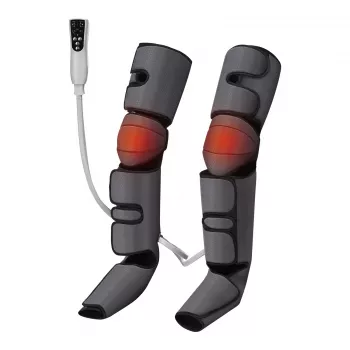
- Multi-zone air chambers: Helps distribute pressure more evenly across foot, calf, thigh, and around the knee area.
- Adjustable intensity: Essential for sensitive legs, beginners, and anyone with intermittent pain flare-ups.
- Multiple modes or sequences: Alternating patterns can feel more natural and reduce “pinch points.”
- Fit and coverage: Correct sizing and wrap placement prevents sliding and improves consistent compression.
- Noise and portability: Quieter pumps are easier to use while reading or winding down; compact storage helps daily consistency.
For general education on how compression is used to support circulation and comfort, see Cleveland Clinic’s overview of compression therapy.
How to use it safely and comfortably
The best session is the one that feels good during use and leaves your legs feeling lighter afterward—without numbness, tingling, or soreness that lingers into the next day.
- Start low: Use the gentlest setting for the first few sessions to learn what “firm but comfortable” feels like.
- Keep wraps smooth: Avoid wrinkles that can concentrate pressure in one spot.
- Limit session length at first: Shorter sessions reduce the chance of tenderness or numbness.
- Watch for warning signs: Stop if there is sharp pain, tingling that persists, discoloration, or worsening swelling.
- Hydrate and move: A short, easy walk afterward can help maintain the “lighter legs” feeling.
Beginner routine for sore legs
| Day | Intensity | Time | Best time of day |
|---|---|---|---|
| 1–2 | Low | 10–15 min | Evening or after activity |
| 3–5 | Low to medium | 15–20 min | After work or workouts |
| 6–7 | Medium (as tolerated) | 20–30 min | When legs feel heavy or tight |
Who should check with a clinician first
Compression can be helpful for many people, but it isn’t appropriate for every situation. It’s worth checking with a clinician first if any of the following apply:
- Anyone with a history of blood clots (DVT), clotting disorders, or unexplained leg swelling.
- People with severe peripheral artery disease, significant neuropathy, or uncontrolled heart failure.
- Those with open wounds, skin infections, or severe dermatitis on the area being compressed.
- Pregnancy or post-surgical recovery: use only with individualized medical guidance.
- If pain is sudden, one-sided, hot/red, or accompanied by shortness of breath, seek urgent evaluation.
For red-flag symptoms and risk factors, refer to Mayo Clinic’s DVT guide. For circulation conditions that may change what’s safe, review MedlinePlus on peripheral artery disease.
Getting better outcomes: small habits that add up
Product options (in stock)
Air Compression Leg Massager for Foot, Calf, Thigh & Knee Pain Relief
Foldable Utility Shopping Cart with Wheels & Telescopic Handle
FAQ
How long should a leg compression massage session be?
Typical sessions range from 10–30 minutes. Start on the shorter end and increase gradually if it stays comfortable and you don’t notice numbness or lingering pain afterward.
Can an air compression massager help with swelling in the legs?
It may help mild, activity-related swelling by supporting circulation and comfort, especially when paired with elevation. Persistent swelling, one-sided swelling, or swelling with redness and heat should be evaluated to rule out more serious causes.
Is it safe to use a leg compression massager every day?
Daily use is often fine when the intensity is comfortable and there are no medical contraindications. Pause and consult a clinician if symptoms worsen or if there is a history of blood clots, severe vascular disease, or unexplained swelling.








Leave a comment