4 Ratchet Straps for Motorcycle & Luggage Tie-Downs
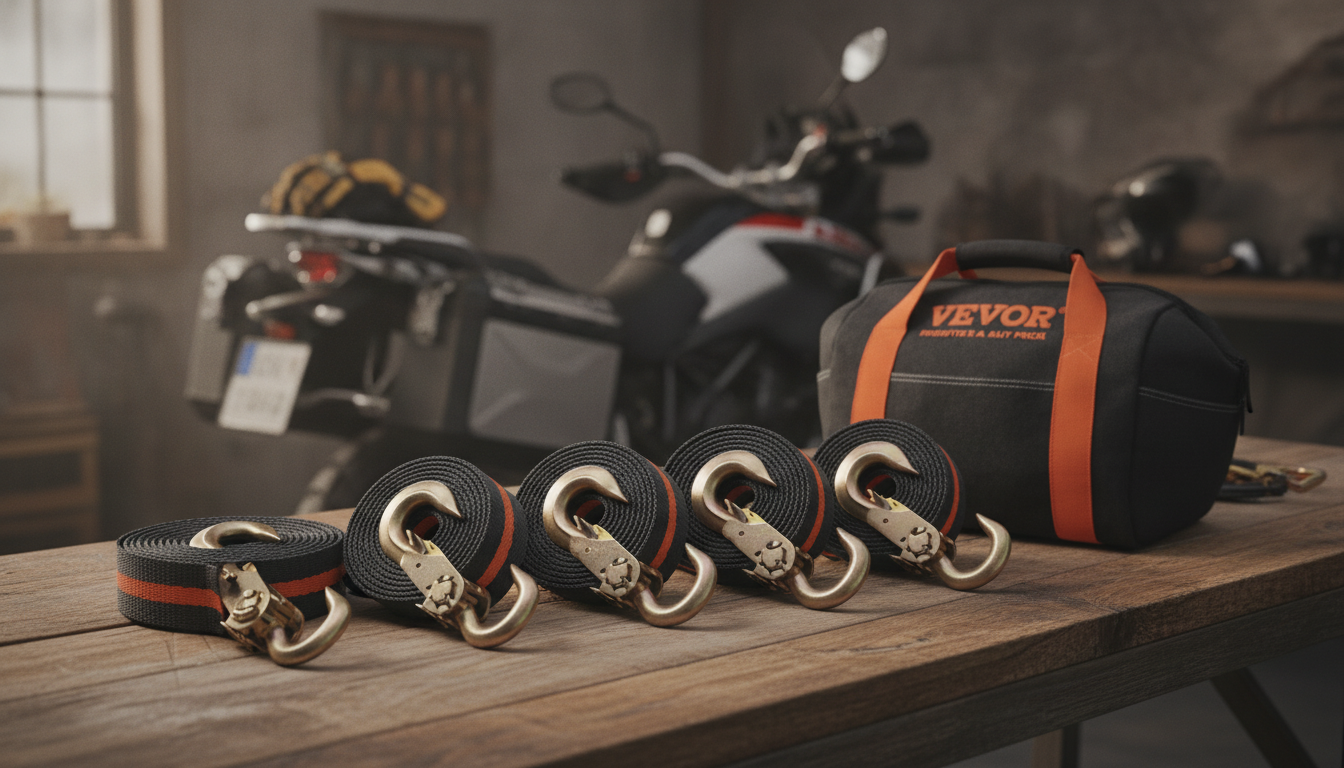
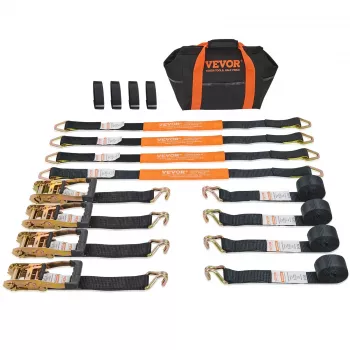
4pcs Ratchet Strap Tie Down Cargo Belt with Metal Buckle for Luggage & Motorcycle
Keeping luggage and motorcycle cargo stable on the road comes down to one thing: secure, repeatable tension that doesn’t slip. A ratchet strap set with a metal buckle is designed for fast tightening, firm hold, and quick release—useful for weekend trips, daily commuting gear, and packing awkward loads where knots and bungees fall short.
If you want a dependable, everyday tie-down option, check out the 4pcs Ratchet Strap Tie Down Cargo Belt with Metal Buckle for Luggage & Motorcycle for balanced, multi-point securing on racks, carriers, and platforms.
What This 4-Piece Ratchet Strap Set Is Designed to Do
A four-strap kit is built around consistency: you can repeat tension levels, keep loads centered, and reduce the temptation to over-crank a single strap. Compared with elastic cords or improvised knots, a ratcheting mechanism helps maintain a steady clamp force through vibration and road movement.
- Create consistent, adjustable tension using a ratcheting mechanism instead of relying on knots or elastic cords
- Help reduce load shift during braking, cornering, and bumps by keeping items cinched to a rack, trailer, or luggage platform
- Offer multiple straps for balanced tie-down points (front/back, left/right) rather than over-tightening a single strap
- Use a metal buckle/ratchet to improve grip and durability in frequent tightening cycles
- Fit common use cases: motorcycle tail bags, dry bags, duffels, small cargo boxes, camping gear, and general travel luggage
Key Parts and How They Work Together
Ratchet straps perform best when the “system” is treated as a whole—webbing, hardware, anchor points, and the surfaces the strap touches. Small routing choices (like avoiding a twist or protecting a sharp edge) often make the difference between a secure ride and a strap that loosens or wears out early.
- Webbing strap: the load-bearing textile band; keep it flat (no twists) to improve strength and prevent edge wear
- Ratchet/metal buckle: the tensioning and locking mechanism; incremental tightening helps avoid sudden over-pull
- Free end (tail): the portion pulled through the ratchet spool; tuck or tie off excess to prevent flapping in wind
- Anchor points: where the strap connects (rack loops, D-rings, frame-mounted points); choose solid points that won’t bend or cut the strap
- Contact surfaces: wherever the strap touches cargo; use padding or edge protection on sharp corners to reduce abrasion
Quick check before tightening
| Item to check | Why it matters | What to do |
|---|---|---|
| Anchor point strength | Weak points can fail under vibration and braking forces | Use fixed loops/rings; avoid plastic trim or thin sheet metal |
| Strap path | Twists and rubbing increase wear and reduce holding power | Lay webbing flat; route away from hot exhaust and moving parts |
| Cargo stability | Straps hold best when cargo can’t roll or slide underneath | Pack tightly; add a non-slip mat or blocks if needed |
| Edge protection | Sharp corners can cut webbing over time | Use sleeves, padding, or reposition strap over smoother edges |
| Excess tail | Loose ends can whip and loosen over long rides | Tuck, tie, or wrap the tail after final tensioning |
Using Ratchet Straps on a Motorcycle: Practical Setups
Motorcycle loads need two things: vertical clamp force (to keep the bag down) and lateral stability (to prevent side-to-side walk). Four straps give you the option to build that stability without crushing soft luggage or bending a lightweight rack.
- Two-strap rear setup: one strap on each side to keep a tail bag or duffel centered; tighten evenly to prevent side pull
- Four-point stability: use all four straps for bulky luggage; create an “X” pattern if anchor points allow to reduce lateral sway
- Keep straps clear of heat and motion: route away from exhaust headers/mufflers, chain/belt, wheel, and suspension travel
- Avoid compressing delicate items: tension should secure the load without crushing contents; add a rigid base plate under soft luggage if needed
- Re-tension after the first 5–10 minutes: soft luggage can settle; a quick click or two restores firmness
Using Ratchet Straps for Luggage, Travel, and General Cargo
If you’re moving multiple totes or supplies through a parking lot, pairing secure tie-downs with a rolling carrier can help keep stacks stable. A compact option for errands and hauling is the Foldable Utility Shopping Cart with Wheels & Telescopic Handle.
Safety and Load Ratings: What to Look For Before Relying on Any Tie-Down
For deeper background on securement expectations and terminology, see the FMCSA cargo securement rules and tie-down guidance from the Web Sling & Tie Down Association (WSTDA).
Care, Storage, and Longevity Tips
For a simple home base to sort, stage, and pack gear before loading up, a sturdy prep surface can help keep straps, pads, and accessories organized. The Stainless Steel Kitchen Work Table with Wheels can double as a rolling setup station in a garage or utility room.
FAQ
How tight should a ratchet strap be for motorcycle luggage?
Tighten until the bag can’t shift forward/back or side-to-side when pushed firmly by hand, then stop before you crush contents or deform the rack. Tighten straps evenly and re-check after a short ride since soft luggage can settle.
Can ratchet straps damage paint or bodywork?
Yes—webbing and metal hardware can scuff surfaces under vibration. Route straps so they don’t rub painted panels, use padding where contact is unavoidable, and keep the metal ratchet from swinging into bodywork.
What’s the difference between working load limit and breaking strength?
Breaking strength is the approximate force where the strap fails in testing, while working load limit is a lower, safer rating meant for everyday use. Use WLL to plan real tie-down capacity and add straps to distribute force.










Leave a comment