Rolling Stainless Steel Work Table with Locking Wheels
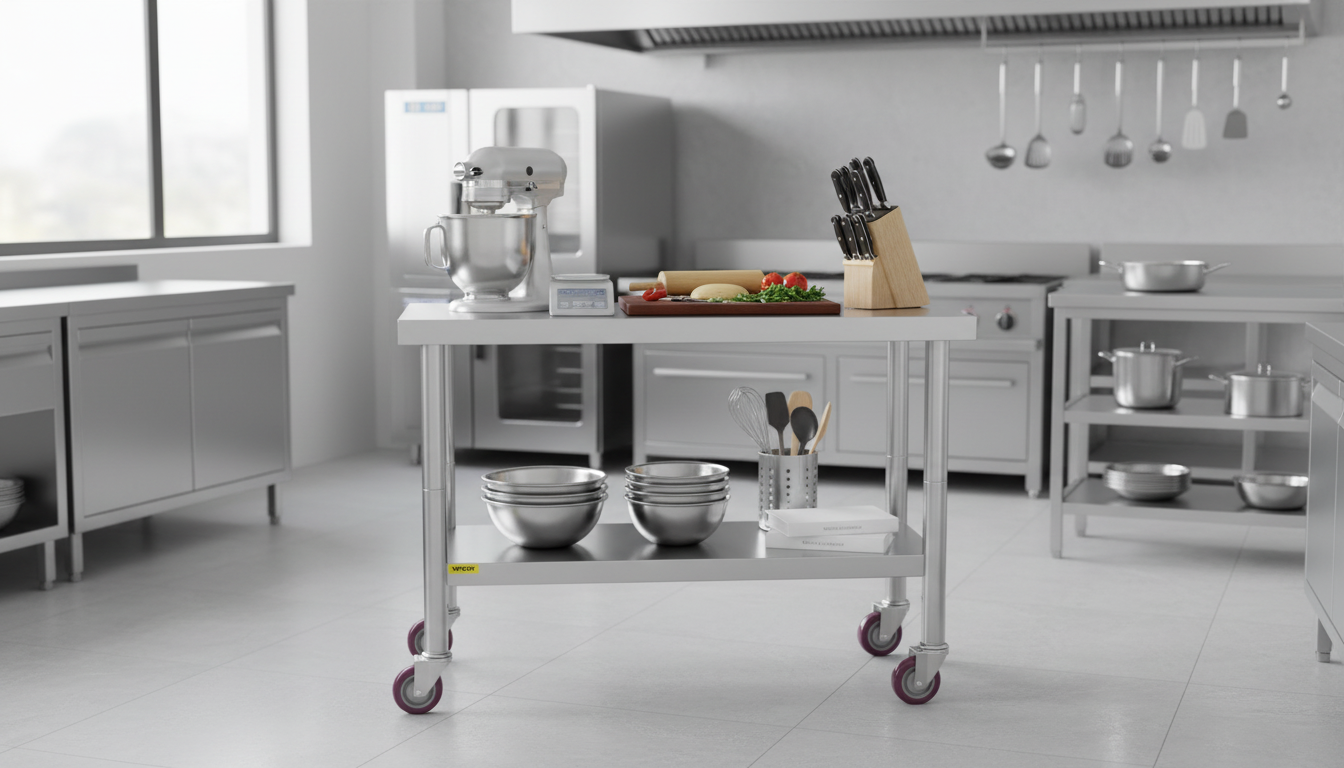
Stainless Steel Kitchen Work Table with Wheels: A Practical Upgrade for Prep, Storage, and Mobility
A rolling stainless steel work table adds flexible counter space where it’s needed most—next to the stove during service, beside the sink for dish staging, or in a garage and laundry room for messy projects. With easy-to-clean surfaces and lockable mobility, it’s a straightforward way to improve workflow without remodeling. If your kitchen routinely feels “one cutting board short” of comfortable, a mobile work surface can bridge the gap without permanently stealing floor space. For more guidance, see Heavy-Duty Commercial Prep Station With Storage Shelf & ….
What a Rolling Stainless Steel Work Table Is Best For
The biggest advantage of a wheeled stainless table is that it adapts to your routine instead of forcing you to adapt to your kitchen’s fixed counters. For further reading, see Sturdy table for outdoor food prep on wooden deck.
- Food prep overflow space for chopping, mixing, portioning, and plating when the main counter is already covered.
- Mobile staging area between the fridge, sink, and cooktop to reduce back-and-forth steps during busy cooking windows.
- Appliance cart for stand mixers, air fryers, or countertop ovens that can be rolled out when needed and parked when not.
- Extra storage for bins, sheet pans, small appliances, and cleaning supplies on the lower shelf.
- Multi-room utility use for laundry folding, craft projects, or garage organization where easy cleanup matters.
Key Features That Matter Most
Two work tables can look similar online and behave very differently in a real kitchen. Prioritize the details that impact stability, safety, and cleanup.
- Work surface: Choose smooth, non-porous stainless steel that wipes clean quickly and resists staining from sauces, oils, and spices.
- Wheels and locks: Casters should roll smoothly and include at least two locking wheels to prevent drifting during chopping or mixing.
- Frame stability: Reinforced legs and cross-bracing help reduce wobble when kneading dough or running a stand mixer.
- Lower shelf: A shelf adds high-value storage without increasing footprint; a raised lip can help keep items from sliding while moving.
- Edges and corners: Rounded corners and finished edges help prevent snags, bumps, and grime-catching seams.
- Weight capacity: Consider both static weight (stored items) and dynamic stress (rolling across thresholds or uneven flooring).
Feature checklist for everyday use
| Feature | Why it helps | What to look for |
|---|---|---|
| Locking casters | Keeps the table steady during prep | At least 2 locks; locks that are easy to press/release |
| Lower shelf | Adds storage without adding footprint | Rigid shelf; easy-to-clean surface |
| Reinforced legs | Reduces wobble under load | Crossbars or thickened supports |
| Smooth stainless top | Fast cleanup and better hygiene | Non-porous, easy-wipe finish |
| Corner finishing | Safer movement in tight kitchens | Rounded corners; deburred edges |
Sizing and Placement Tips for Real Kitchens
A rolling table is most useful when it fits your “working lanes”—the paths you naturally walk while cooking. Before buying, measure with doors and drawers open, not just closed.
- Measure the working lane: Leave comfortable clearance for cabinet doors, refrigerator swing, and the dishwasher when it’s open and loading.
- Match height to tasks: Prep height affects comfort. If you’ll chop frequently, prioritize a height that doesn’t force shoulders up or wrists down. For appliance staging, focus on stability and access.
- Plan a parking spot: Choose a consistent “home” location so the table doesn’t become a catch-all that blocks traffic.
- Account for wheel clearance: Casters add height and roll best on flatter surfaces; thick grout lines and thresholds can change how stable the table feels while moving.
- Appliance cart check: Confirm the top footprint and leave room for ventilation and cord routing so cables don’t snag on casters.
Cleaning, Care, and Food-Safe Habits
Stainless steel is popular in professional kitchens because it’s durable and simple to sanitize when used correctly. For general food-equipment best practices, see NSF’s food equipment standards overview and the FDA Food Code guidance on cleaning and sanitizing food-contact surfaces.
When Wheels Make the Biggest Difference
Product Spotlight: Stainless Steel Kitchen Work Table with Wheels
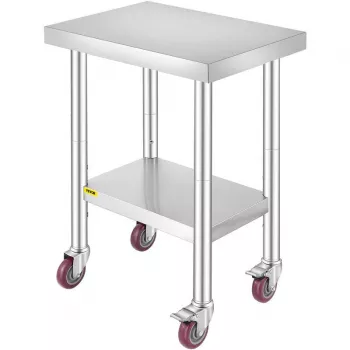
If the goal is flexible prep space and reliable storage without a built-in remodel, the Stainless Steel Kitchen Work Table with Wheels is a practical option for day-to-day kitchen use. The stainless work surface supports common tasks like chopping and mixing, while the casters make it easy to reposition the table for service, cleanup, or storage.
Quick details
| Item | Details |
|---|---|
| Name | Stainless Steel Kitchen Work Table with Wheels |
| Price | $82.17 USD |
| Availability | In stock |
| Where to buy | Product page link above |
Bonus Helper for Heavy Hauls
If your workflow problem is less about prep space and more about getting heavy items to the kitchen (bulk groceries, bottled drinks, pantry refills), a separate cart can complement a rolling work table. The Foldable Utility Shopping Cart with Wheels & Telescopic Handle helps move loads efficiently, while the stainless table stays focused on clean prep and staging.
FAQ
Do the wheels need to lock on a kitchen work table?
Locking casters help keep the table steady during chopping, mixing, and appliance use. Aim for at least two locking wheels, and make sure the locks are easy to engage and release.
How should stainless steel be cleaned to avoid streaks and rust spots?
Use mild soap and water for routine cleaning, then rinse and dry to reduce streaking and water spots. Avoid abrasive pads, and clean up salty or acidic spills quickly to help prevent discoloration.
Can a rolling stainless work table hold heavy appliances?
Yes, as long as the table’s stated weight capacity and frame stability match the appliance. Consider both the static weight while parked and the extra forces created when rolling over uneven flooring or thresholds.









Leave a comment