Indoor Cat Enrichment: DIY Toys, Puzzles & Play Plan
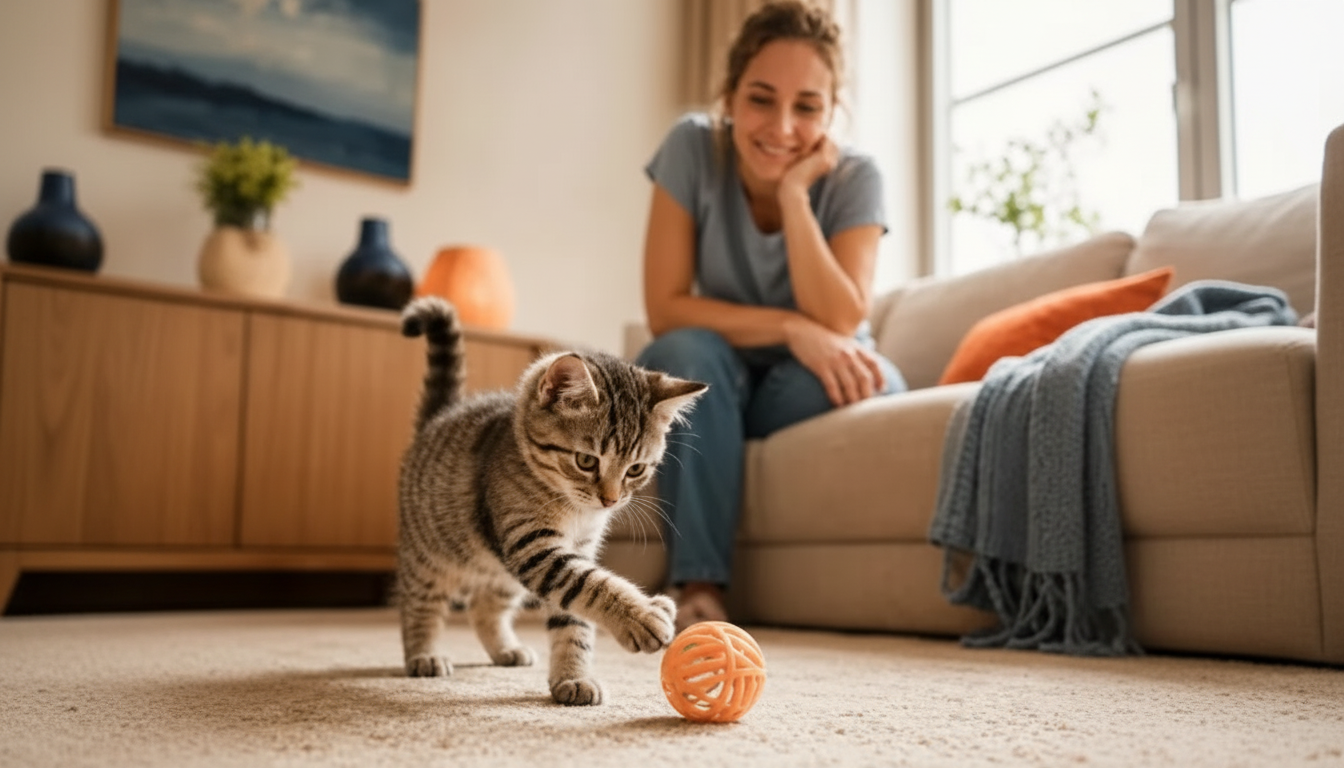
Enrichment Ideas for Indoor Cats: Printable Guide, DIY Toys, Play Routines, and Home Tips
Indoor cats thrive when their day includes hunting-style play, problem-solving, climbing, scratching, and calm recovery time. A few small changes—rotating toys, creating vertical routes, adding food puzzles, and setting predictable play windows—can reduce boredom, destructive behavior, and stress-related issues while supporting healthy weight and confidence. For evidence-based guidance on feline needs, the American Association of Feline Practitioners (AAFP) and International Cat Care both emphasize choice, control, and species-appropriate activities.
What “enrichment” means for an indoor cat
Enrichment is anything that helps your cat express natural behaviors in safe, satisfying ways—especially the hunt cycle and the need for secure rest. The best plans don’t rely on constant entertainment; they create an environment that invites healthy “cat stuff” throughout the day.
- Match enrichment to natural behaviors: stalk, chase, pounce, climb, scratch, chew, explore, and rest in safe spaces.
- Aim for variety across five areas: physical activity, mental challenge, sensory input, social interaction, and environmental choice/control.
- Look for feedback signals: more relaxed grooming and sleep, fewer midnight zoomies, less attention-seeking, and reduced play-biting.
A simple daily play routine that actually sticks
Consistency matters more than perfection. Many cats do best with short, repeatable “bursts” that fit into real schedules. If your household is busy, a predictable routine can be the difference between a cat who naps contentedly and one who invents chaos at 2 a.m.
- Use short, consistent sessions: 2–3 play bursts per day (5–12 minutes each) often work better than one long session.
- Follow the hunt sequence: warm-up (slow ground moves) → chase (faster, zig-zag) → capture (let the cat “win”) → reward (small treat or meal) → cool-down (quiet petting or rest).
- Schedule play before meals: it mirrors hunt-then-eat rhythms and can reduce begging or nighttime wake-ups.
- Rotate toys weekly: keep novelty high by putting most toys away and swapping a few back in.
| Time window | Activity | Goal | Notes |
|---|---|---|---|
| Morning | 5–10 min wand play + breakfast | Burn energy, reinforce routine | End with a “catch” and food reward |
| Midday | Food puzzle or scatter feeding | Mental work, slow eating | Start easy; increase difficulty gradually |
| Afternoon | Window perch + bird/bug viewing | Sensory enrichment | Add a soft mat and shade option |
| Evening | 10–12 min hunt play + small treat | Reduce nighttime zoomies | Include jumps/climbs if joints allow |
| Night | Calm hideaway + quiet chew/kicker | Settle and sleep | Avoid lasers right before bed unless followed by a tangible toy |
DIY enrichment toys from common household items
Homemade toys can be surprisingly effective because they lean into sniffing, pawing, and problem-solving. Keep everything simple, remove staples/tape, and supervise anything your cat might chew apart.
- Paper “loot box”: put crumpled paper, a few treats, and a safe toy in a shallow box for foraging.
- Toilet-paper-roll puzzle: fold one end, add kibble, fold the other end; supervise if your cat eats cardboard.
- Towel treat roll: sprinkle treats on a towel, roll it, and loosely tie; encourages sniffing and paw-work.
- Sock kicker (supervised): fill with fabric scraps and a pinch of catnip (if your cat responds) and stitch/secure tightly.
- DIY track chase: a baking tray with a ping-pong ball creates quick batting fun; stop if your cat chews the ball.
Food puzzles and foraging ideas to prevent boredom eating
Many indoor cats don’t need more calories—they need more “work” around calories. Foraging turns meals into an activity, which can reduce scarf-and-barf, boredom begging, and restless pacing.
- Swap one bowl meal for a puzzle feeder a few times per week; increase frequency if your cat enjoys it.
- Try scatter feeding: place multiple small piles of kibble in different spots to encourage searching and movement.
- Make it easy at first: visible treats, wide openings, short puzzles; frustration should be minimal.
- Multi-cat tip: set up separate foraging stations so one cat can’t guard all the “good spots.”
- Watch portions: measure daily food, then distribute it across puzzles and scatter piles to keep calories consistent.
Cat-friendly home setup: small upgrades with big impact
Sensory enrichment: scents, sounds, and textures (without overwhelm)
Troubleshooting: when enrichment isn’t working yet
Printable guide option for easy tracking and rotation
A simple checklist can make enrichment feel automatic: pick play windows, assign puzzle days, and rotate toys without re-planning every week. For a ready-to-use one-page routine plus rotation tracking, see the Printable cat enrichment guide with DIY toys and play routines.
Simple organization tip for toy rotation
Toy rotation is easiest when “away” actually means out of sight. A small, dedicated bin or rolling cart can keep wands, kickers, and puzzle items contained so you can swap sets in under a minute. If you want a mobile storage option for supplies, treats, and DIY materials, consider the Foldable Utility Shopping Cart with Wheels & Telescopic Handle.
FAQ
How much play does an indoor cat need each day?
Many indoor cats do well with about 15–30 minutes total per day, split into 2–3 short sessions. Kittens and high-energy cats often need more, while seniors may prefer gentler, shorter bursts.
What are easy enrichment ideas for cats that are home alone during the day?
Set up a window perch, leave a simple food puzzle or a small treat scavenger hunt, and offer multiple nap/hide spots so your cat can choose comfort. Rotate a few safe solo toys, and avoid leaving stringy items out unless you can supervise.
Are DIY food puzzles safe for cats?
They can be safe with supervision and sturdy materials, especially when you start with simple designs. Avoid small chewable pieces, clean puzzles regularly, and stop using any DIY item if your cat begins ingesting cardboard or plastic.










Leave a comment