Easy Cat Enrichment Ideas for Indoor Cats
How do I create enrichment for my cat?
Cat enrichment is about giving your cat safe ways to hunt, climb, scratch, explore, and rest—without turning your home upside down. The best approach mixes quick daily play with small changes to the environment so your cat gets both physical exercise and mental stimulation.
Start with “hunt” play every day
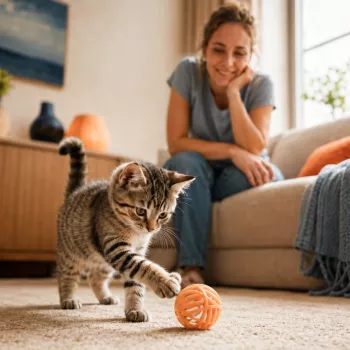
Use a wand toy, string-on-a-stick, or any toy your cat can chase. Move it like prey: hide it behind furniture, let it “escape,” then pause so your cat can stalk. Aim for 5–10 minutes once or twice a day, and end with a small treat or meal to satisfy the hunt-catch-eat routine.
Add food puzzles and foraging
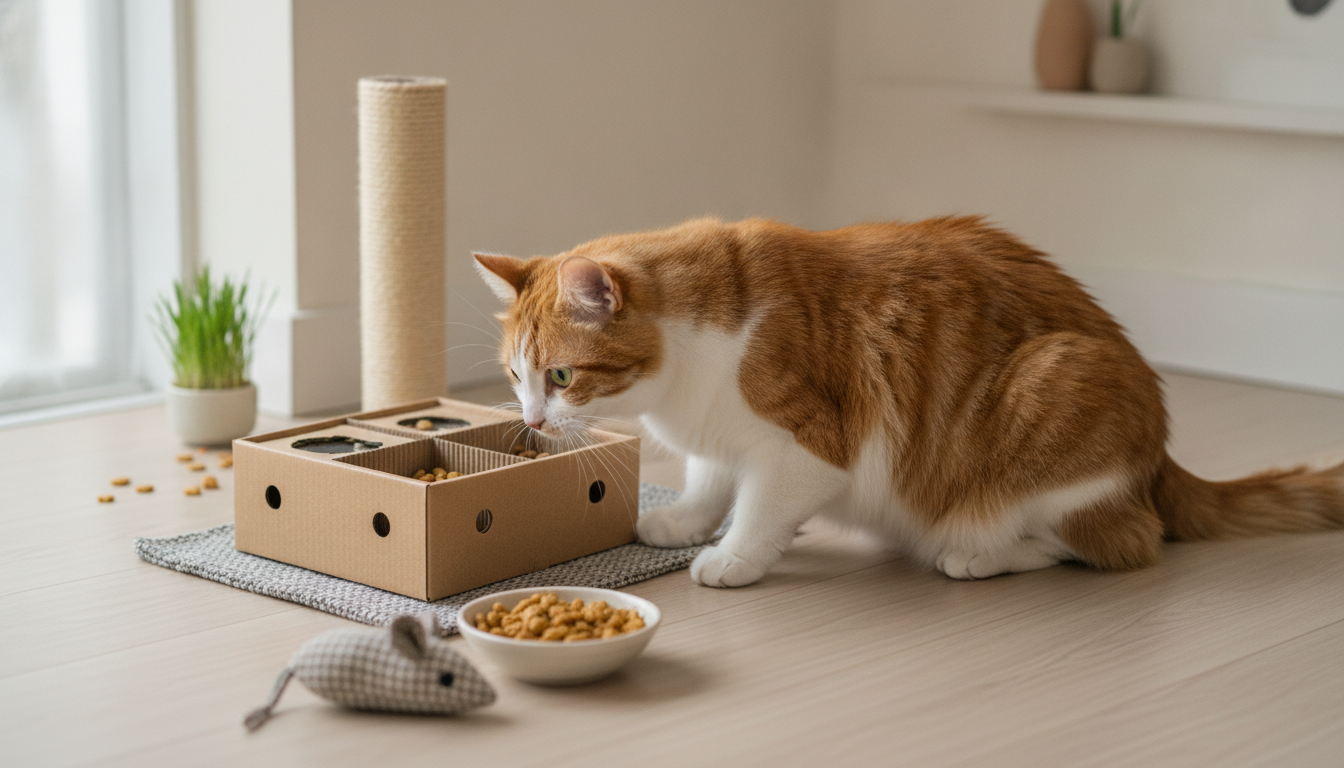
Turn meals into a game by using puzzle feeders, treat balls, or a DIY “snuffle” setup (treats tucked into a towel’s folds). You can also scatter a portion of kibble in a few safe spots around one room so your cat has to search. Start easy, then increase difficulty once your cat understands the game.
Create vertical space and cozy observation points
Cats feel enriched when they can get up high. Use a cat tree, sturdy shelves, a window perch, or even a cleared bookcase level with a blanket for traction. Place one lookout near a window for “cat TV,” and another in a quieter spot for decompression.
Offer variety: scratch, chew, and rotate
Provide at least one vertical scratcher and one horizontal option. Rotate toys weekly (put half away, bring half out) to keep things novel. Simple DIY options—like a paper bag on its side, a box with holes cut in it, or crumpled paper “prey”—often work as well as store-bought toys.
For a complete plan with DIY toys, puzzle ideas, and a simple weekly routine, visit this indoor cat enrichment guide.
FAQ
How can I tell if my cat is bored?
Common signs include excessive sleeping with bursts of nighttime activity, attention-seeking behaviors, overgrooming, or getting into cabinets and cords. A bored cat often becomes “mischievous” because it’s trying to create its own stimulation.









Leave a comment