Outdoor Hanging Plants: Safety Tips for Wind, Sun & Hooks
Is it safe to put hanging plants outside?
Yes—hanging plants can be safe outdoors as long as the plant, container, and hanging hardware are matched to your climate and exposure. The biggest outdoor risks are wind, intense sun, temperature swings, and water management. A quick check of placement and support goes a long way toward keeping both your plants and your porch (or patio) safe.
Choose the right spot for outdoor exposure
Start by matching light and weather to the plant’s needs. Many popular hanging plants prefer bright, indirect light; a covered porch, pergola, or under-eave location can reduce scorching and slow soil drying. If your spot gets full afternoon sun, use more sun-tolerant plants and plan on more frequent watering.
Make sure the hanging hardware is truly outdoor-ready
Outdoor use demands sturdier support than indoor hooks. Use rust-resistant hardware (galvanized or stainless steel) and anchor it into a stud, joist, or solid masonry—never just thin trim or weak siding. Check weight ratings for hooks, chains, and brackets, and remember the pot gets much heavier after watering.
Wind and storms are the real stress test
If you regularly get gusts, pick a sheltered corner or use a stand with a stable base instead of a ceiling hook. Shorten the drop length so the basket swings less, and avoid oversized, top-heavy pots in exposed locations. Before storms, move hanging plants to a protected area to prevent breakage and reduce the chance of a falling pot.
Drainage and drip control matter outdoors
Use containers with drainage holes so roots don’t sit in water after rain. If drips could stain decking or create a slippery walkway, place plants where runoff won’t be a hazard, or use a drip tray designed for outdoor use (and empty it after heavy rain).
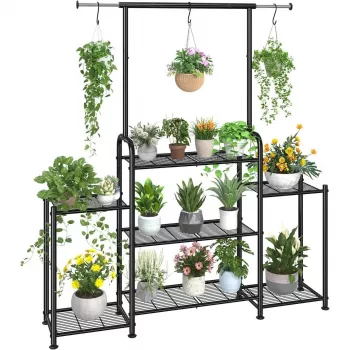
For ideas on organizing mixed pots and hangers in a compact footprint—especially if you want a more stable alternative to ceiling hooks—see this guide to a 3-tier metal plant stand with an expandable hanging rod.
FAQ
How do you keep outdoor hanging plants from blowing around?
Hang them in a sheltered spot, shorten the hanging chain, and choose heavier, lower-profile pots. In very windy areas, switch to a freestanding stand so the plant is supported from below rather than swinging from above.








Leave a comment