Finally Focused Workbook: Stop Procrastinating in 7 Days
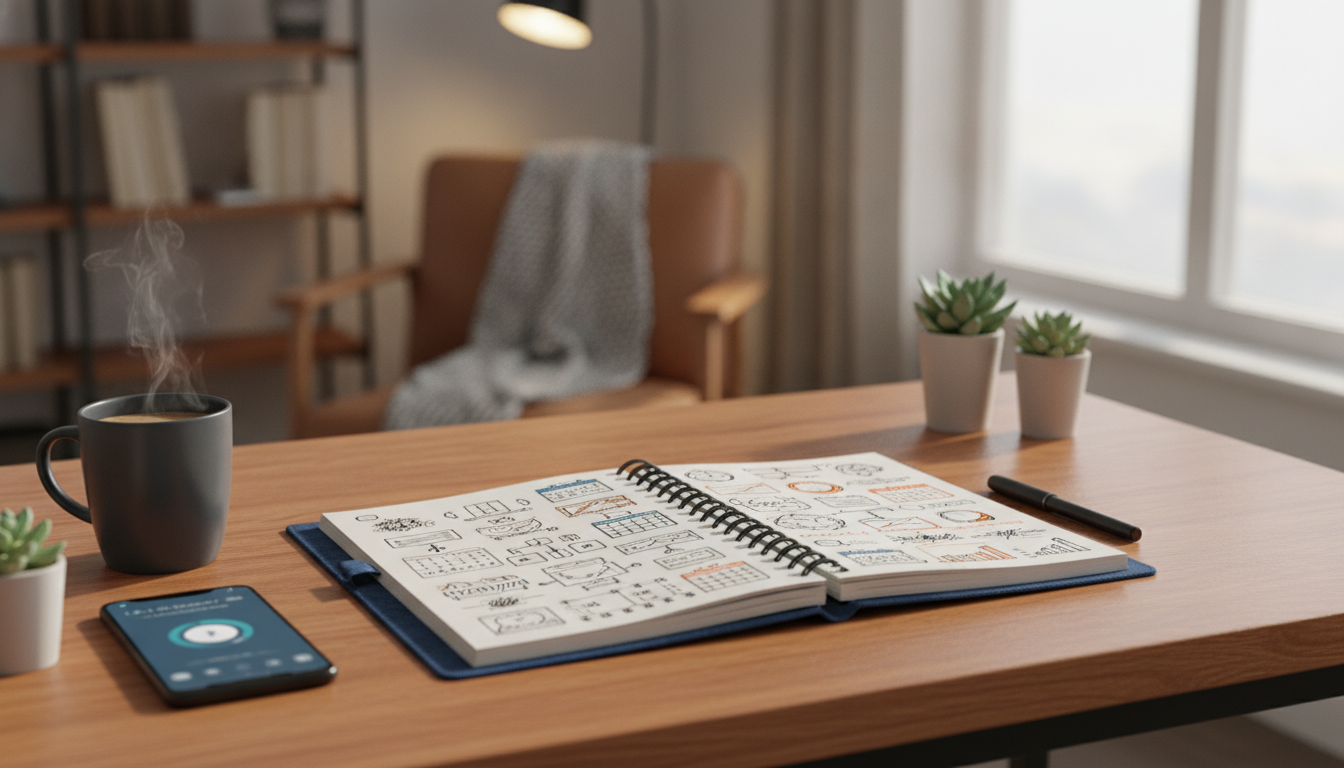
Finally Focused: A Practical Anti‑Procrastination Workbook for Daily Momentum
Procrastination rarely disappears with motivation alone—it usually needs a repeatable system. Finally Focused: The Anti-Procrastination Workbook is a workbook-style productivity ebook built to turn scattered effort into consistent follow-through using focus-building exercises, time management tools, and simple planning routines that fit real schedules. Instead of asking you to “try harder,” it guides you through small decisions that make starting easier, distractions less costly, and progress visible.
What “Finally Focused” is and who it helps
Finally Focused is structured like a hands-on workbook: prompts, exercises, and checklists designed to be used—not just read. It’s especially helpful for people who start strong but struggle with consistency because of overwhelm, distraction, or a lack of clear next steps.
- Workbook-first format: practical pages you can revisit whenever momentum drops.
- Designed for real life: supports students, professionals, creators, and anyone juggling multiple priorities.
- Guided structure: ideal if open-ended journaling feels too vague, too time-consuming, or too easy to abandon.
For a quick definition of the behavior this guide targets, the American Psychological Association describes procrastination as the voluntary delay of an intended task despite expecting to be worse off for the delay (APA Dictionary of Psychology).
Common procrastination patterns the workbook aims to break
Many people procrastinate for reasons that look like “laziness” on the surface but are actually predictable patterns. Finally Focused targets the most common ones with tools that reduce friction and increase clarity.
- Avoidance from unclear next steps: vague goals create mental fog, so starting feels heavier than it should.
- Overplanning (“research mode”): preparing becomes a stand-in for doing.
- Task switching and attention drift: stress and notifications pull focus away before progress compounds.
- All-or-nothing thinking: waiting for the perfect mood, time, or setup postpones action indefinitely.
- Overwhelm from big tasks: projects never get broken into small, finishable actions.
One practical way to counter these patterns is to set “if-then” plans (implementation intentions) that pre-decide what you’ll do when a situation arises—an approach linked to stronger follow-through (APA PsycNet overview).
Core tools inside the focus-building guide
Finally Focused emphasizes small, repeatable tools that make it easier to begin, stay with one task, and recognize progress. The goal is momentum you can sustain on normal days—not a perfect schedule that collapses the first time you’re tired.
- Task-to-action breakdowns: convert “work on project” into a specific next step you can finish in 10–20 minutes.
- Time-blocking and prioritization: protect deep work windows so urgent noise doesn’t consume the day.
- Progress tracking: reduces the “I did nothing today” bias by capturing completed actions.
- Reflection prompts: identify triggers (stress, uncertainty, boredom) and remove friction points.
- Low-energy routines: maintain consistency with minimum viable progress instead of quitting for the day.
Tool-to-outcome map
| Tool | What it helps with | When to use it |
|---|---|---|
| Next-action prompts | Starting faster and reducing avoidance | When a task feels unclear or intimidating |
| Time-block planning | Protecting focus time and reducing task switching | At the start of the day or week |
| Priority filtering | Choosing what matters when everything feels urgent | When the to-do list is too long |
| Distraction plan | Lowering interruptions and attention drift | Before deep work sessions |
| Weekly review | Learning what works and adjusting without guilt | End of week or before planning |
If you like short focus sprints, the Pomodoro method (timed work intervals with breaks) is a simple way to structure those protected blocks (Pomodoro Technique overview).
A simple 7-day setup (use it without overhauling your life)
The fastest way to feel a difference is to keep the setup small and concrete. This 7-day ramp-up focuses on one meaningful goal and builds a lightweight routine around it.
Making the time management tools stick
When it’s a good fit—and when it isn’t
Product details and where to get it
If you want a guided system you can reuse, Finally Focused: The Anti-Procrastination Workbook – Productivity Ebook & Focus-Building Guide with Time Management Tools is available now and works best alongside a calendar (digital or paper) and a consistent daily review time.
Quick product snapshot
| Item | Details |
|---|---|
| Product | Finally Focused: The Anti-Procrastination Workbook – Productivity Ebook & Focus-Building Guide with Time Management Tools |
| Price | $48.99 USD |
| Availability | In stock |
| Link | View product |
Helpful add-ons to support your routine
- Stainless Steel Kitchen Work Table with Wheels to create a dedicated, clutter-resistant work surface that makes “sit down and start” easier.
- Foldable Utility Shopping Cart with Wheels & Telescopic Handle to keep supplies, books, or work materials organized and portable—especially helpful if you move between rooms.
FAQ
How quickly can results show up with an anti-procrastination workbook?
Small wins can show up in the first week when next actions are clear and you protect a couple of focus blocks. Bigger change usually comes from repeating the setup-and-review cycle so you spot triggers early and adjust without starting over.
Does this work if distractions come from phone notifications and multitasking?
It can, especially when you pair time blocks with a simple distraction plan (silence notifications, batch check-ins, and commit to one next action). Reducing task switching makes it easier to re-enter focus without spending extra time “warming up” again.
Is it better to time-block or use a to-do list?
Time-blocking protects focus by reserving time on the calendar, while a to-do list captures tasks so they don’t clutter your head. A practical combination is to schedule your top priorities as blocks and keep everything else in a backlog to pull from later.












Leave a comment